
If you’ve been trying to fix your sleep, you’ve likely come across magnesium. And then comes the confusion.
Some people say magnesium glycinate is best. Others recommend citrate. Some talk about malate. Every article seems to push a different answer.
So naturally, you ask: What is the best form of magnesium for sleep?
The truth is simple, but often missed.
Each type of magnesium helps in a different way. No single form covers everything your body needs for deep, consistent sleep.
This guide breaks it down clearly. You’ll understand the differences, what each form does, and what actually works in real life.
Quick Answer: What Form of Magnesium Is Best for Sleep?
The best form of magnesium for sleep is not one single type. It is a blend of multiple forms (full-spectrum magnesium).
Sleep is not controlled by just one system. It depends on:
- Brain activity
- Nervous system balance
- Muscle relaxation
- Stress levels
- Recovery processes
A single form can support one or two of these. But a blend supports all of them together.
Why Most People Choose the Wrong Magnesium?
Many people search for what type of magnesium is best for sleep, pick the most recommended one, and expect strong results.
Usually, that’s magnesium glycinate.
They take it for a few days and notice:
- Slight relaxation
- A bit of calmness
But still:
- Wake up in the middle of the night
- Feel mentally active at bedtime
- Wake up tired
This leads to frustration.
The problem is not magnesium itself. The problem is choosing only one form.
Understanding How Sleep Actually Works
To understand what form of magnesium is best for sleep, you need to know what your body needs at night.
Good sleep requires:
1. A Calm Mind
Your brain needs to slow down. Thoughts need to settle.
2. A Relaxed Body
Muscles must release tension. Your body must feel safe and calm.
3. Balanced Nervous System
Your system must shift from “alert mode” to “rest mode.”
4. Stable Sleep Cycles
You need to move through light and deep sleep properly.
If even one of these is off, your sleep suffers.
That’s why a single magnesium form often feels incomplete.
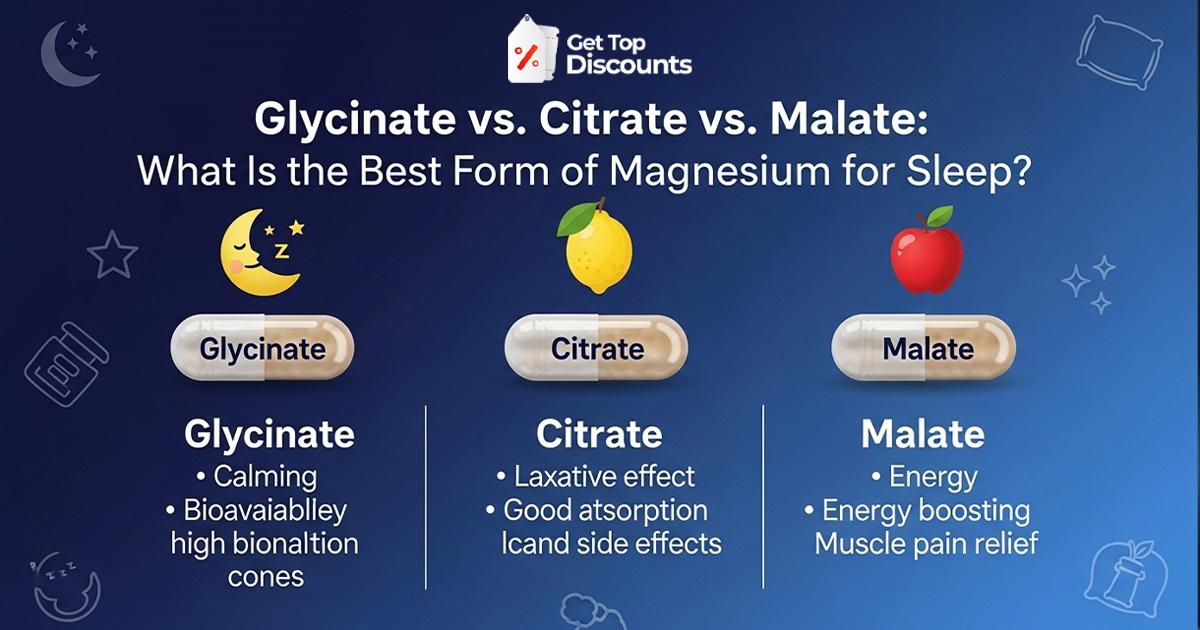
Magnesium Glycinate vs Citrate vs Malate (Detailed Comparison)
Let’s break down the most common options people compare.
Magnesium Glycinate → helps you relax
This is the most common type for sleep.
What it does:
- Helps lower stress
- Helps your body relax
- Reduces muscle tension
Why people like it:
It is gentle and easy to take.
Limits:
- Does not support brain function much
- Does not help with energy
- May not stop you from waking up at night
It helps you feel calm, but it does not fix sleep fully.
Magnesium Citrate → helps digestion
This type is mostly used for gut health.
What it does:
- Helps with bowel movement
- Improves digestion
- Can reduce bloating
Why it matters for sleep:
Better digestion can make you more comfortable at night.
Limits:
- Not very calming
- Does not target sleep directly
- May not help with anxiety
It is good for health, but not enough for sleep on its own.
Magnesium Malate → supports energy
This type helps with energy levels.
What it does:
- Helps reduce tiredness
- Supports muscle recovery
- Improves daytime energy
Why it matters for sleep:
Better energy during the day can help your sleep schedule stay on track.
Limitations:
- Not directly calming
- Does not reduce racing thoughts
- Not designed for sleep support
Helps indirectly, but not enough on its own.
Comparison Table: Popular Magnesium Forms
| Magnesium Form | Main Benefit | Helps Sleep? | Key Limitation |
| Glycinate | Relaxation | Yes | Limited brain support |
| Citrate | Digestion | Slightly | Not calming enough |
| Malate | Energy | Indirectly | Not sleep-focused |
This comparison shows one clear pattern:
Each form helps, but only partially.
The Missing Pieces Most People Ignore
To fully answer what type of magnesium is best for sleep, you need to look beyond the common three.
There are other forms that play key roles.
Magnesium Taurate → Nervous System Balance
This form supports your heart and nervous system.
What it does:
- Helps regulate stress signals
- Supports calmness
- Reduces physical anxiety
Important for reducing the “wired” feeling at night.
Magnesium L-Threonate → Brain Support
This type works on your brain.
What it does:
- Helps your brain work better
- Reduces racing thoughts
- Improves focus and clarity
Good for people who think too much at night.
Magnesium Orotate → Cell Support
This type helps your body recover.
What it does:
- Helps repair cells
- Supports overall health
- Helps with long-term recovery
Important for long-term sleep quality.
Magnesium Sucrosomial → Absorption Support
This form improves how magnesium is absorbed.
What it does:
- Enhances bioavailability
- Helps your body use magnesium better
Without good absorption, even the best form won’t work well.
Why Single-Form Magnesium Feels Like It “Almost Works”?
Many people describe magnesium like this:
“It helped a bit, but not enough.”
That’s because:
1. It Solves Only One Problem
Sleep issues are multi-layered. One form cannot fix everything.
2. The Brain Is Often Ignored
Without brain support, your thoughts stay active.
3. The Nervous System Stays Alert
If your system stays in stress mode, deep sleep is hard.
4. Results Stay Partial
You feel:
- Slightly calmer
But still: - Wake up
- Feel tired
- Overthink
This leads to inconsistent results.
Why The Blend Of All Works Best?
Now we can clearly answer:
What is the best form of magnesium for sleep?
It is a multi-form magnesium blend.
Because it combines:
- Glycinate → relaxation
- Taurate → nervous system support
- Threonate → brain support
- Malate → energy balance
- Citrate → digestion
- Orotate → recovery
- Sucrosomial → absorption
This creates a complete system.
Instead of helping just one thing, it supports your full sleep cycle.
How multi-form magnesium helps sleep (step by step)?
A mix of different types works in stages.
Step 1: Calms your mind
Helps reduce racing thoughts and mental noise.
Step 2: Relaxes your body
Reduces muscle tension and physical stress.
Step 3: Supports your nervous system
Helps your body shift into rest mode.
Step 4: Improves deep sleep
Helps you stay asleep longer and more steadily.
Step 5: Helps recovery
You wake up feeling fresh instead of tired.
That’s why a mix of magnesium types often works better.
What Most Users Notice?
When people switch from single-form to multi-form magnesium, they often report:
- Falling asleep faster
- Fewer night wake-ups
- Less anxiety at night
- More stable sleep
- Better morning clarity
These changes usually build over time.
How Long Does Magnesium Take to Work?
Magnesium is not instant.
Here’s what to expect:
- First few days: mild calmness
- 1 week: better sleep onset
- 2 weeks: deeper, more stable sleep
Consistency is key.
Skipping days reduces effectiveness.
How to Take Magnesium for Best Results?
Keep your routine simple.
- Take it 30–60 minutes before bed
- Use it every night
- Avoid mixing too many supplements
What matters most is regular use.
Common Mistakes to Avoid
When choosing the best form of magnesium for sleep, avoid these mistakes:
1. Choosing Only One Form
This limits results.
2. Expecting Instant Effects
Magnesium works gradually.
3. Taking It Inconsistently
Irregular use leads to weak results.
4. Ignoring Absorption
If your body cannot absorb it well, it won’t work properly.
How to Choose the Right Magnesium Supplement?
When selecting a supplement, look for:
- Multiple magnesium forms
- Good absorption support
- A formula designed for sleep
This saves you time and guesswork.
Don’t settle for one form. Get the 7-form Magnesium Breakthrough for the lowest price today.
Frequently Asked Questions (FAQs)
A mix of different forms works best. It helps your body in more ways.
Types that calm your mind and body. They should support your brain and nerves.
It helps you relax. But it is not enough on its own.
A little bit. It mainly helps with digestion.
About 30 to 60 minutes before sleeping.